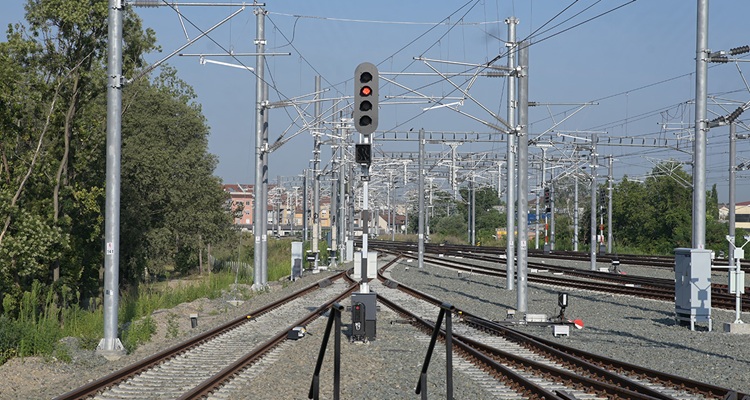

Railway Track Balises
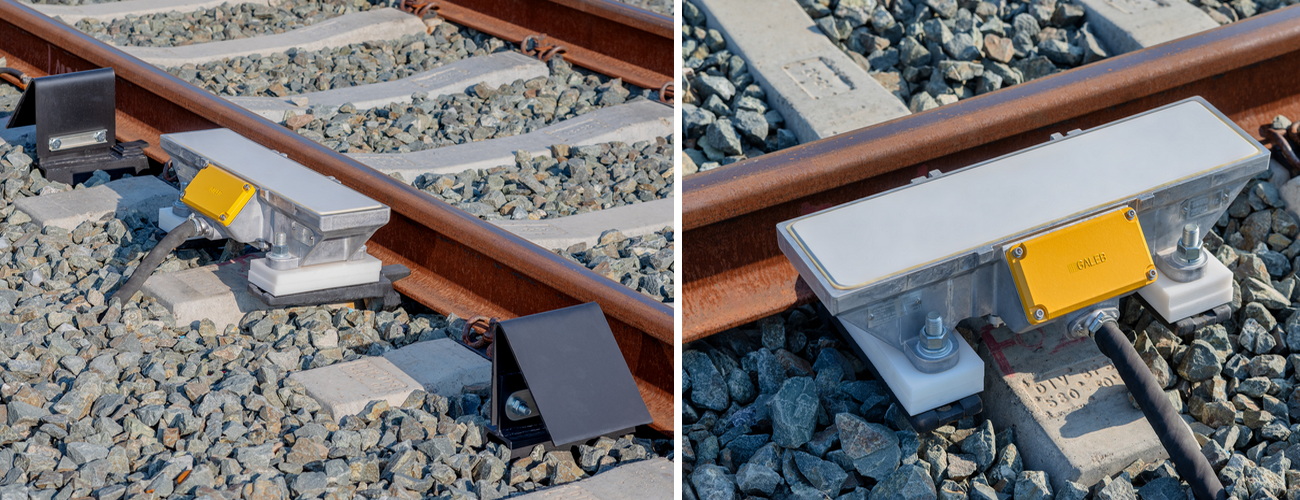
Small combined track balise 1000 / 2000 Hz PB21 and small track balise 500 Hz PB5
The GFSU PB21 small track balise is designed for inductive Automatic Train Control (ATC) systems.
The balise enables the inductive transmission of information from the track to the train, based on the principle of resonant electrical circuits.
Its primary role is to initiate the safety process within the train’s automatic stop system.
Function in the Safety System
The balise can trigger three safety scenarios:
✔ Warning to the train driver to reduce speed
✔ Automatic braking if the driver fails to respond
✔ Emergency braking in case of passing a signal at danger (red aspect)
Construction and Reliability
The balise is designed for long-term operation in demanding railway infrastructure conditions.
Main components include:
- Housing made of cast AlSi12 aluminum alloy (annealed to achieve optimal magnetic properties)
- Cover made of glass-fiber-reinforced polyester
- Ferrite core with rectangular cross-section
- Coil made of enamelled wire based on thermodur materials
- High-specification capacitors placed in a separate chamber
- Interior filled with polyurethane foam for mechanical stability and moisture protection
All elements are protected against external influences, moisture, and mechanical loads, ensuring long service life and reliable system operation.
Operating Principle
The locomotive part of the automatic train stop system generates a magnetic field at three frequencies:
- 500 Hz
- 1000 Hz
- 2000 Hz
When the train passes over an active track balise, inductive interaction occurs between the balise and the onboard locomotive device.
This results in a change in the resonant current at a specific frequency, which the system detects and processes within the logical units of the automatic train stop system.
Frequency logic:
- 2000 Hz – immediate and unconditional braking
- 1000 Hz – monitoring of driver vigilance and speed control
- 500 Hz – approach control and additional safety functions
This three-frequency resonant technology ensures a high level of safety and system response accuracy.