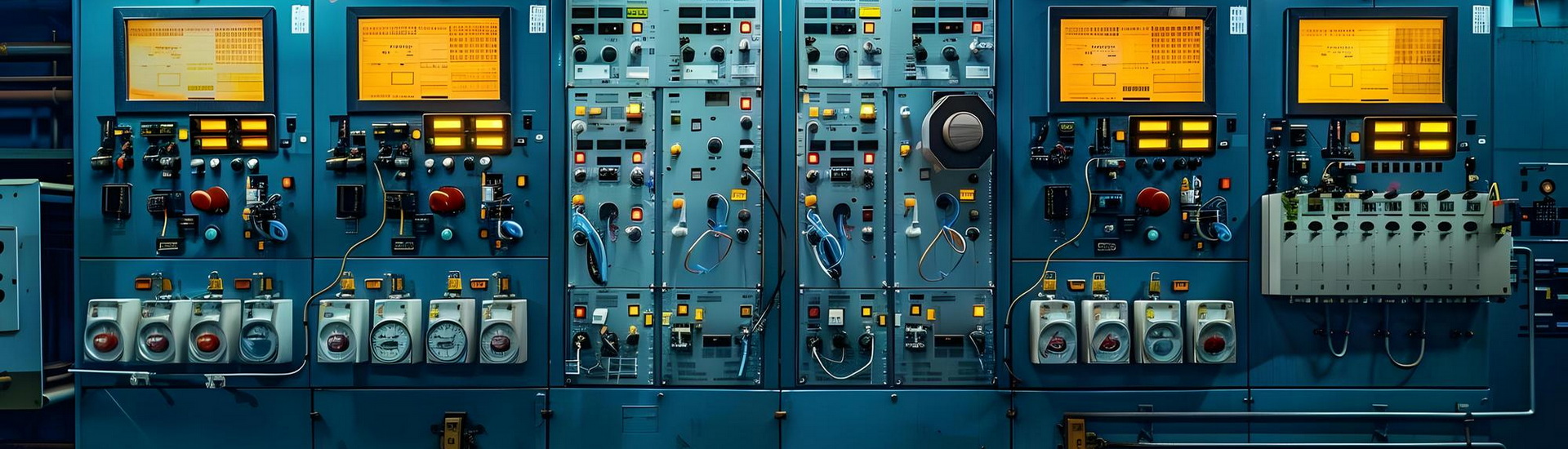
Signal Relay FSU K-50
Description
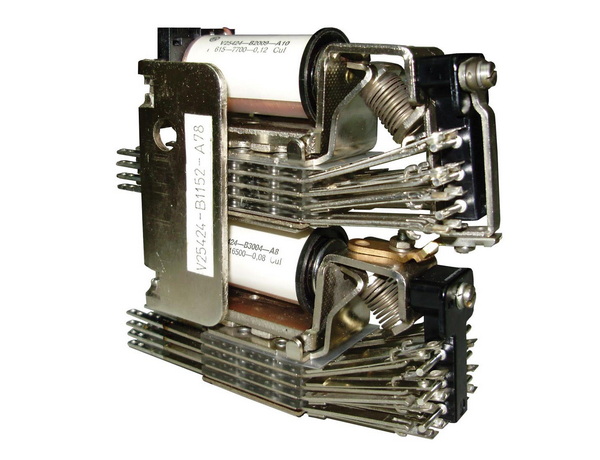
The FSU K-50 relay is designed for use in railway signalling and safety systems with high reliability and functional safety requirements.
It is typically used in relay groups implementing the functionality of the SpDrS-64-JŽ system, as well as in station and line signalling equipment.
The relay is the result of long-term development and experience in railway signalling, with a focus on stable operation and system safety logic.
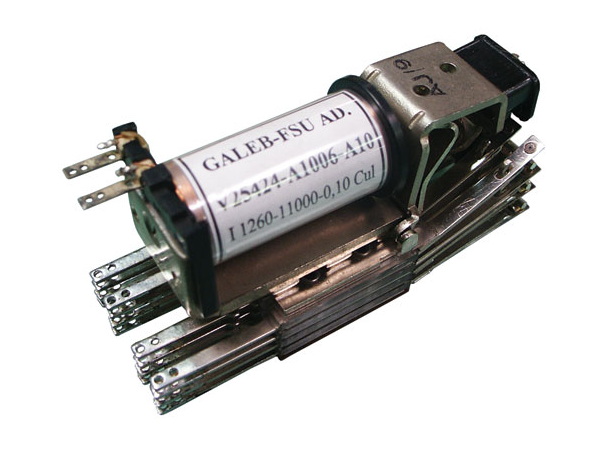
Auxiliary (“Latch”) Relay FSU K-50
The auxiliary relay is used in relay-based safety circuits for interlocking and blocking functions (such as route locking, permission control, and other safety functions).
The relay remains in the commanded position until a new request for a state change occurs, ensuring the stability and safety of the system.
It belongs to the group of bistable relays, meaning it has two stable positions depending on the excitation of one or the other relay.
Construction Characteristics
|
Element |
Description |
|
Base |
2 standard FSU K-50 relays |
|
Mechanism |
Mechanically coupled armatures |
|
Stability |
Bistable (two stable positions) |
|
Coils |
2 |
|
Armatures |
2 |
|
Contacts |
Each armature has its own contact system |
The relay with an energized armature remains mechanically locked by the armature of the released relay, ensuring secure state retention within the safety circuit.
Technical Characteristics
|
Parameter |
Value |
|
Relay type |
FSU K-50 |
|
Number of contacts |
up to 8 (most commonly 4 normally open + 4 normally closed) |
|
Weight |
≈ 220 g |
|
Mounting position |
Horizontal |
|
Permitted inclination |
up to 45° in all directions |
|
Application |
Signalling systems, station equipment, automatic block systems (APB), and level crossing groups |
The Q relay (a variant with enhanced characteristics) is used in signal groups, station cabinets, and signalling control groups.